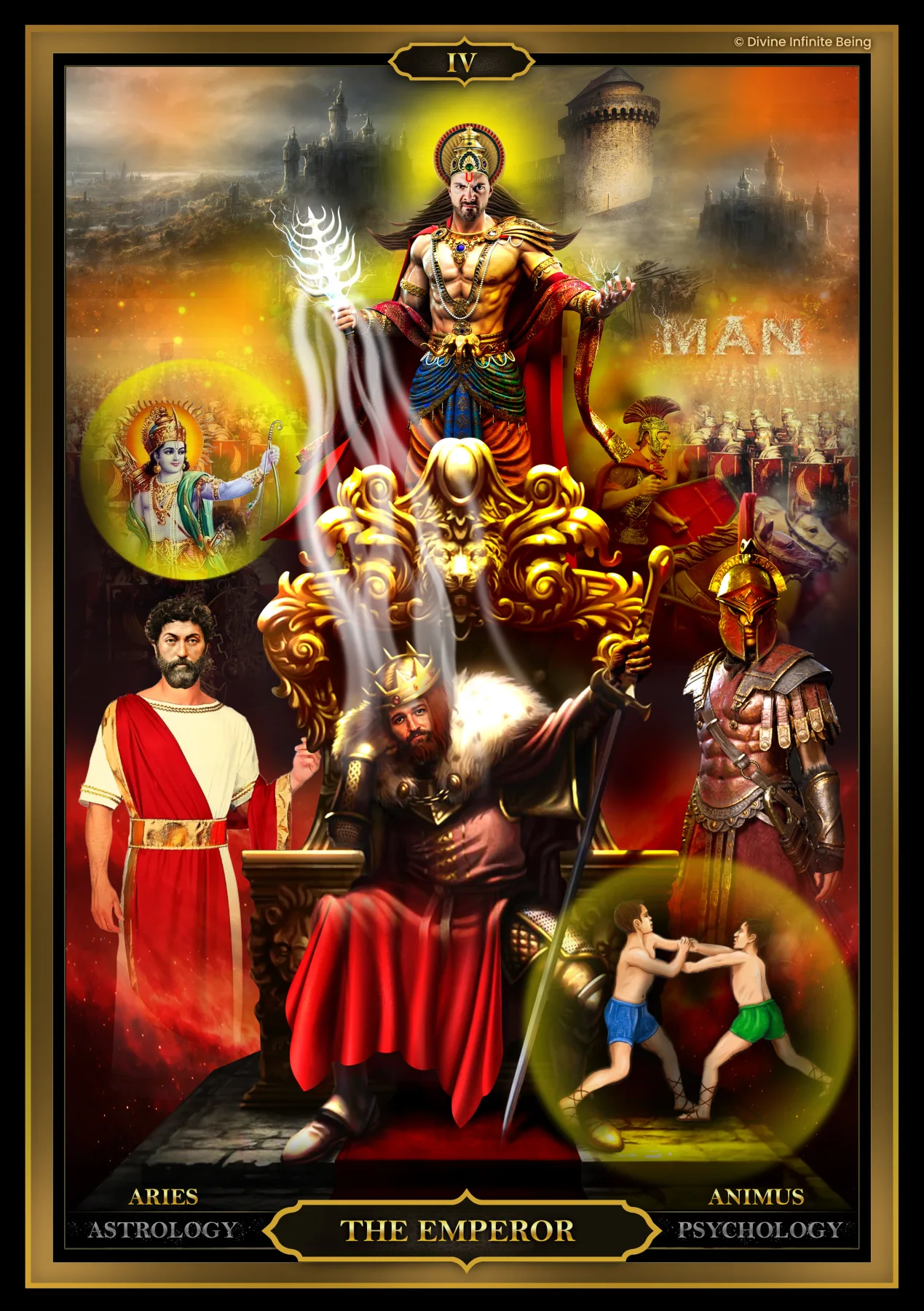
In our School's relation to Thelema as a whole, Crowley is the doorway and Iamblichus the master of the house behind it. Central Doctrine, §59.14
Two years in the Hebrew Kabbalah
When I stopped working at the mushroom farm and moved on, I stayed in Salem, Oregon, and at twenty-two I began a dedication of two years to the exclusive practice of the Kabbalah in its Hebrew form. I practiced pure Lurianic Kabbalah and the meditations of Aryeh Kaplan. I stripped the Hermetic and Christian themes out of the Kabbalah and set aside the Golden Dawn attributions and the Thelemic correspondences I had worked with since my teens, and I practiced the authentic Hebrew models.
The Kabbalah I had known until then was the Western Qabalah of the ceremonial orders, the Tree of Life with the Tarot laid on its paths and the planets set in its spheres. It had served me well in the rite. What I wanted now was the Tree as the Jewish mystics had known it, with its twenty-two letters as the letters of the Hebrew alphabet and the Names of God as the Names of a living scripture, before anyone had joined them to a deck of cards. So I put the cards away for a season and gave my hours to the letters, the Names and the ten sefirot, from Keter, the Crown, down to Malkhut, the Kingdom.
Lurianic Kabbalah is the teaching of Isaac Luria, who taught in Safed in the sixteenth century and whose words were recorded by his disciple Ḥayyim Vital. Luria begins before the first moment of creation. The Infinite, Ein Sof, fills all things, and to make room for a world it draws itself back from a single point, which is the contraction he called Tzimtzum. Into that space a ray of light goes out, and the vessels formed to hold it break under its force, scattering sparks of the light through all the worlds. The work of a human life, in Luria's teaching, is tikkun, the repair, the gathering of those sparks and their return to their source through prayer, devotion and the right intention held in every act.
I practiced with that picture in front of me every day. The intention Luria asks for in prayer is called kavanah, and the Lurianic masters set out whole systems of kavanot, the meditations that hold a Name and its letters in the mind while the prayer is spoken. Kaplan gave me the doorway into that practice. His books gather the meditative methods of the Jewish tradition, from the early masters of the chariot through the letter meditations of the medieval Kabbalists to the unifications of the Safed school and the quiet seclusion of the Hasidic teachers. In his commentary on the Sefer Yetzirah, the Book of Formation, the letters themselves become the stones from which the world is built. The Sefer Yetzirah teaches that God created the world through thirty-two wondrous paths of wisdom, the ten sefirot and the twenty-two letters. The letters fall into three groups, the three mothers, Aleph, Mem and Shin, the seven doubles and the twelve simples, and through them the book assigns the elements, the planets, the days of the week, the signs of the zodiac and the parts of the human body. Kaplan read it as a manual of meditation as much as a book of cosmology, in which the meditator engraves and carves the letters in the mind and so enters the work of creation from inside. With Kaplan's books on my table and Luria and Vital beside them, I learned to hold one Name for a long time, letter by letter, until the mind became still around it.
Those two years were a very powerful experience for me. The Name 'Ehyeh, which I sound at the crown in the Middle Pillar, now stood in its own Hebrew setting, as the Name of Keter and the Name God gives himself from the burning bush, "I am that I am". The Tetragrammaton, which the ceremonial orders had taught me to read as a formula of the four elements, became for me the Name the High Priest spoke once a year in the Holy of Holies. In practicing the Hebrew models without their Hermetic dress, I came to know the Kabbalah as a tradition with its own prayers, its own scriptural roots and its own long history, from the Sefer Yetzirah, through the Bahir in Provence and the Zohar in Castile, to Luria in Safed.
Before the Tree stand the three veils of the unmanifest, Ain, Nothing, Ain Sof, the Infinite, and Ain Sof Aur, the Infinite Light. The third veil, the Infinite Light, is the one I have always loved most. Today it joins the Kabbalah, in our teaching, to the station of Helios and to the light that is instruction.
I came out of those years regarding the Kabbalah as a luminous branch of the Platonic tradition. Its picture of one Infinite showing itself through ordered emanations, each distinct and each carrying the whole of its source, is common ground with the theurgic ladder, and many of the medieval thinkers who shaped its speculative language, Isaac Israeli and Solomon ibn Gabirol among them, stood in the Neoplatonic stream.
The two years also gave me a habit I still keep in my teaching. Western students of the Kabbalah usually meet it in three voices at once without knowing it. There is the Kabbalah proper, the Jewish mystical tradition of the Zohar and Luria. There is the Hermetic Qabalah of the Golden Dawn, built by Éliphas Lévi, Samuel Liddell MacGregor Mathers and their circle, who joined the Tree to astrology, alchemy and the Tarot. And there is now our School's own correspondence between the Tree and our solar teaching. I have lived in all three voices for most of my life and I draw on them freely, sometimes within one sentence. In Salem I learned to tell them apart, so that I never give to the Zohar what belongs to the Golden Dawn, or to the Golden Dawn what belongs to our School.
Our School integrates the Kabbalah in a lighter way, as our primary adherence is to the theurgic and Platonic stream, expressed in plainer astrological and cosmological language. For those close to me whose practice is profoundly Kabbalistic, I have taught the solar register and the Divine Double in the language of the Kabbalah as well. A theurgist formed in the Kabbalah should not have to abandon the language of their formation in order to understand what our rites do, and Ritual Praxis and Instruction gives them that language in its fourth appendix.
The Builders of the Adytum
Just after those two years I enrolled as a correspondence student with the Builders of the Adytum, B.O.T.A., the Western mystery school founded by Paul Foster Case. It carries forward much of the Golden Dawn's Qabalah and its Tarot, and enrolling there was one of the ways I came back from the purely Hebrew practice into the wider occult work.
B.O.T.A. sent me a steady stream of monthly lesson packets, each devoted to a single Tarot card, with color plates and esoteric commentary. The practice asked for participation as well as study. The B.O.T.A. deck, drawn by Jessie Burns Parke under Case's direction, comes to the student in black and white, and the student colors each card by hand according to the lesson. I colored my own deck that way, one card to a lesson, taking in the colors and symbols with my hands and eyes while I worked through the text.
In Case's teaching each of the twenty-two Major Arcana is joined to a letter of the Hebrew alphabet and to a path on the Tree of Life, and each letter and each card carries its own color and its own musical note. The coloring of the cards was a lesson in that scale of color as much as in the images. After two years with the letters in their Hebrew setting, I met them again on the Tree of the Western schools, one to a card, and the Hebrew letters, the Tree and the Tarot came back together for me in the Hermetic Qabalah of the West.
I had read Crowley's Thoth deck since I was eighteen, and B.O.T.A. set Case's deck beside it. The two decks are two different worlds in many details. Case follows the Golden Dawn in placing Strength at eight and Justice at eleven, and Crowley set them back, with Adjustment at eight and Lust at eleven, and moved the letter Tzaddi to the Emperor and Heh to the Star. B.O.T.A. was my first serious, structured and large-scale immersion in the philosophy of the Tarot, and beside my own study of the Thoth cards its lessons became the backbone of my understanding of divination.
I remained a dedicated B.O.T.A. student for three years, to about 2003. I worked through their publications and listened to their extensive lecture tapes, refining my understanding of esoteric symbolism as I went. I played those tapes over and over. Correspondence study suited the life I had then, as the lessons came to me wherever I was living and fitted around whatever work I had at the time.
Back to work, and the first classes
After the two years in the Kabbalah I returned to food service management, and I kept up my holistic health work alongside it. The food service work paid the rent. Around both jobs I kept up the rite, in a temple that had to fit wherever I happened to be living.
In the year 2000, at the age of twenty-five, I began to share what I knew in public for the first time. I offered my first classes at New Age and occult bookstores, teaching the Tarot, the Kabbalah and theurgic ritual. I was working through the monthly lessons of the Builders of the Adytum while I taught, and I had the two years of the Hebrew Kabbalah and the ceremonial rites of my own practice behind me.
In those bookstore classes a few chairs were set out among the shelves, a deck was spread on a table, and the people who came were curious, or troubled, or already deep in a practice of their own. I taught the cards one by one, the Tree and its letters, and the banishing and the invocation as I performed them myself. The students asked plain questions, why a rite is done the way it is done, and why a card drawn from a shuffled deck should say anything about a life. I had answers from my reading and answers from my own experience.
I have taught ever since, first in the bookstores and then to the students who stayed with me.
Mornings with Troy
It was during these classes that I met Troy Wenning, who became one of my lifelong friends and spiritual companions. Like me, Troy was a generalist, and he was passionately exploring astrology, the I Ching, energy psychology, Mayan cosmology and countless other fields.
Every morning we would meet to talk about the mysteries of theurgy, meditation and the esoteric arts. Each of us brought whatever he was working on, a card, a hexagram, a chart, a passage from a book or a rite from the night before, and the talk would run from one system to the next until the morning was gone and the working day had to begin.
Alone with my books I tended to go very deep into one system at a time, as I had just done with the Kabbalah. With Troy the systems sat on the table together. We kept finding the same shapes in traditions that had never met each other, a center and its circumference, a descent and a return, a number of powers set in order around one source. His friendship and the range of our conversations greatly expanded my awareness of how many seemingly separate systems could harmonize and connect. Troy brought astrology into those talks as one more language of the same order. For my own part I kept astrology where it had always stood in my practice, at the edge of the work, in the correspondences, the planetary days and hours and the names of the gods.
A website called the Merkava
That same year I built a website on GeoCities (some of you will remember those, and laugh) and called it Merkava Mysticism and the Kabbalistic Cannon of Light. At that stage I was heavily focused on Kabbalistic theurgy, and I was enthralled by the earliest Hebrew mystical practices. These are the practices of the chariot, the merkavah, which take their name from the vision of Ezekiel, the throne carried on the four living creatures and the wheels full of eyes. The mystics of the chariot sought to ascend through the heavenly palaces, the hekhalot, to stand before that throne, and they did it with fasting, purification, the sounding of divine names and long hymns of praise.
The site held my thinking of the time on Merkava mysticism and the Kabbalah. Through the research and the ritual behind it I came to see that Merkava mysticism was a surviving form of syncretic Hebrew and Greco-Roman theurgy, belonging to the traditions that flourished in the Roman Empire before Christianity rose to dominance. The Jewish mystics who sought the chariot, the Platonists who called down the gods and the priests of the mysteries were working in the same centuries, with a shared vocabulary of ascent, divine names, purification and light. As our School teaches it, that early Merkava mysticism is rooted in the lineage of the Dead Sea Scrolls community of Qumran, whose Songs of the Sabbath Sacrifice describe the worship of the angels around the chariot throne.
That insight grew over the next two decades into the founding vision of the School of Our Divine Infinite Being. If the oldest Hebrew mysticism and the theurgy of late antiquity were once close kin, a modern school could hold them together again, Hebrew Names and Greek gods, the Tree of Life and the Platonic ascent, in one rite. Within our School the earliest Merkava mysticism and certain elements of Hebrew Kabbalah still hold a place of their own.
The chariot has stayed in my work. I have since written an essay on Ezekiel and the Merkavah that follows the vision through the community of Qumran, the mosaic floors of the ancient synagogues and the Book of Revelation. In it I take up the old reading of the four living creatures as the four fixed signs of the zodiac, the lion as Leo, the ox as Taurus, the man as Aquarius and the eagle as Scorpio in its exalted form, the fixed cross that carries the throne, with the wheels full of eyes as the turning heavens.
12 October 2000
That autumn my first son was born, on 12 October 2000. It was the birthday of Aleister Crowley, who was born on 12 October 1875. I was born in 1975, one hundred years after him, and Carl Jung was also born in 1875, on 26 July. I have long felt a strong synchronistic attachment to Crowley's works. Synchronicity is the meeting of an inner meaning and an outer event in one undivided order, and in the birth of my son on that date I felt that meeting.
Selling the library
The years that followed were very hard ones. At the age of twenty-seven I was forced to sell my entire library to cover rent and buy food during a particularly difficult time. It was a heartbreaking decision, as many of those volumes are now considered rare and are worth hundreds, if not thousands, of dollars. That day remains etched in my memory as one of the sacrifices the path sometimes demands.
I kept the practice going through those years in the same temple, with the same journals. Over the years that followed I rebuilt the library one book at a time.
Regardie's citations
In Israel Regardie's pages I kept meeting references to Iamblichus and to De Mysteriis, the defense of the sacred rites that Iamblichus wrote in the late third or early fourth century. Regardie cited it again and again, and in my late twenties those citations led me to buy a copy of the book itself.
De Mysteriis
When I opened De Mysteriis I found a thinker who gave words to what my practice had already been teaching me.
The book is an answer to a letter. The philosopher Porphyry had written to an Egyptian priest named Anebo with a list of hard questions about the gods, the daemons, divination and the rites. Iamblichus answered in the voice of the master Abamon, and his answer runs across the whole work, which its Renaissance editors divided into ten books. Among Porphyry's questions was whether the rites of the priests were after all a kind of magic, an attempt to force the gods by human means. Iamblichus answered that they are not and cannot be, because of who the gods are and what a token is. I recognized Porphyry's question. I had asked it of myself in my own temple many times.
Iamblichus taught that the gods are reached by rite and not by argument. Thinking about the gods, however true, does not join us to them. What joins us is the performance of the works the gods themselves have given. He taught that the divine flows through the whole world and is close to it at every point. In his teaching the gods act, and the rite prepares the place where they can be received.
One teaching of his above all has stayed with me ever since. Theurgy, Iamblichus taught, has a twofold character. Its human face is the rite performed by human beings, which keeps our natural place in the order of the universe. Its divine face is the power of the gods' own symbols, the sunthēmata, which raise the soul to be joined with the gods on high, and this he called taking the shape of the gods (De Mysteriis IV.2). The god's own tokens shape the theurgist into the god's pattern.
He also taught that the soul has a luminous vehicle, an aethereal body illuminated by the gods' light (De Mysteriis III.14), and that the gods have sown their tokens through the cosmos in stones, plants, sounds and numbers, so that in images are captured things greater than every image (De Mysteriis VII.1). The rites, for him, use those tokens because the gods placed them there. The soul has descended wholly into the body, and so it cannot reach the gods by philosophy alone and needs the rites the gods have given.
Purity, in his teaching, is a concause of the rite. The soul's purity and best dispositions are the conditions the gods' action requires, so the theurgist prepares the vessel and the gods fill it. He taught too that theurgy is completed only across a whole life lived accordingly (De Mysteriis VIII.7–8). The rite stands first, and it is surrounded by study, by the cultivation of character and by discernment exercised in daily life.
On divination Iamblichus taught that true divination is divine. It is given by the gods to a soul made ready to receive it, and the human arts of reading signs stand beneath it. I noticed too what he did with astrology. He honored the science of the heavens as true, acknowledged the legitimacy of natal astrology and clearly held it at a distance, subordinating it to the higher aims of theurgic ascent, and he judged the nativity a difficult guide to the personal daemon, which theurgy reveals more fully (De Mysteriis IX.4–5). His call to invoke the divine beyond the material, and to engage the gods through ritually purified symbols and hieratic ascent, resonated deeply with me, and I was content to leave the chart at the edge of the work.
In the years after that first reading I went on to the rest of what survives of Iamblichus, and I returned to the ten books of the Mysteries again and again. I read the book beside my rites, and it became for me the measure against which I held every practice I had learned from the modern orders.
The master of the house
From then on Iamblichus became the spiritual teacher I have taken personally, and our School continues his wisdom, his methods and his theurgic activities in its practices. Crowley's writings had eventually led me to the authoritative works of Iamblichus and his contemporaries, and in our School we say that Crowley is the doorway and Iamblichus the master of the house behind it.
The Golden Dawn and Crowley's order were the twentieth century's recovery of the mysteries. They had inherited the Hermetic, Kabbalistic, Neoplatonic and astrological grammar of the Renaissance and carried it into a new century. De Mysteriis showed me that the recovery could be carried further back, past the Renaissance, to its source in the theurgy of Iamblichus. I could take the rites back to the house they came from and let the master of that house correct them.
That correcting went on for many years. Today I count seven inheritances that our School has received from him, theurgy as an ontological work in which the gods act, the procession of all things from the One and their return to it, purity as concause, the sunthēmata, taking the shape of the gods, the luminous vehicle and the necessity of hieratic ritual. In nearly every respect our practice of theurgy mirrors his, and we remain structurally Iamblichean in our ritual praxis.
I did not see all seven in my first reading. They came one at a time, as I worked with the book over many years and carried what I found into my own practice. Through the combination of theurgy, quantum mechanics and especially the ideas of Carl Jung and Wolfgang Pauli, the centrality of thought in theurgy that Iamblichus proposed later came to light for me, the mind held still and receptive within the rite, the posture of attention through which the gods' own works take hold.
The flight of the alone to the Alone
In those years my worldview was firmly Platonic in a particular way. I held theurgic practice to be what Plotinus called the flight of the alone to the Alone (Enneads VI.9.11), a rising beyond the dance of fate into the stillness of providence. The phrase belongs to Plotinus and not to Iamblichus, and I read Iamblichus through it. My practice was built on transcendence, to rise beyond the bonds of the mundane, to unbind the soul from terrestrial influences and to attain union with the intelligences that dwell beyond the planetary spheres.
The planets, in my practice, were sacred gateways, divine presences to be encountered in their perfected and eternal forms. I revered them as vast intelligences living in the world-soul, and in the rites of those years I met them as radiant, ecstatic presences, guiding, transforming and transfiguring the soul. Through theurgic means I was taking the shape of the gods and drawing those perfecting forces into the waking world of experience. Our School keeps that vision still. Iamblichus himself wanted more of the soul than escape. He wanted it to take its place in the work of the gods, which includes the work of the world, its body and its fate, and it took me many more years and finally the living sky to correct my practice by that teaching.
Gregory Shaw
A teacher I could read only in translation needed a guide, and I found one in Gregory Shaw. I owe more to Shaw than to any other scholar for my understanding of Iamblichus. His Theurgy and the Soul: The Neoplatonism of Iamblichus, first published in 1995, showed me that what I had read in De Mysteriis was a coherent vision of the soul and the cosmos, with the rite at its center. Shaw has shown that the experiences Carl Jung describes were familiar to the Platonic tradition from its beginning and belonged to its vision of what a human being is.
Among all that Shaw has written on the kinship of theurgy and the traditions of India, one treatise has long been among my favorites. I first knew it under the title "Platonic Tantra: Theurgists of Late Antiquity", and I have drawn on it extensively over the years. In it Shaw sets the theurgy of Iamblichus beside the Tantric traditions and finds five teachings they share. In both, the physical senses are portals of the divine and no longer obstacles to it. In both, the soul enters a universal pulse, the spanda of Tantra and the procession and return of theurgy. In both, the finite is the expression of the infinite, and the powers the yogis call siddhis appear among the theurgists as well. In both, the initiate enters the god's audible body through the chanting of mantras or of divine names. And in both, the crucial moment is the descent, when the soul, joined to its cause, returns into the world and finds the world to be the cause's own expression.
For me that treatise joined the Eastern disciplines I kept to the Western rite. Shaw gathered the comparison more fully in his essay "Platonic Siddhas: Supernatural Philosophers of Neoplatonism", in Beyond Physicalism (2015), and in his book Hellenic Tantra (2024).
Gregory Shaw stands among the six teachers I name in the Appreciations of our Central Doctrine, and through his beautiful scholarship Iamblichus gave our Doctrine its third Pillar, the theurgic architecture on which our rites are built.